



American author Charlie wrote in The Wealthy’s Investments that the most powerful way to make money is to have money generate more money. Many people may not yet have fully considered how to effectively increase their wealth and are still overly reliant on employment income while taking a conservative savings approach. In contrast, the wealthy often have greater financial wisdom — they consider borrowing and investing to grow their assets, and this mindset has helped many achieve their financial goals.
To help high-net-worth individuals achieve this goal, today Jiaxin Wealth Management will share a sophisticated financial strategy — IFA. Claude Ménard, Senior Vice President of Marketing for Canada at PPI Advisory, noted that since 2014, more and more people have been discussing and using the IFA financing strategy. It is considered an advanced financial tool designed to help people better manage assets and provide support in capital preservation, tax planning, and wealth transfer.
What Is the IFA Strategy?
IFA stands for Immediate Financing Arrangement. This is an advanced financing strategy. An IFA uses the policy as collateral to apply for a bank loan. The loan funds can be reinvested into business operations or other investments in the short term. The benefit is that it does not affect personal or corporate cash flow while generating more returns at a relatively small cost. Specifically, after paying the first premium, the bank can lend up to 100% of the premium or an equivalent cash value, without requiring repayment of the principal — only the interest needs to be paid.
Generally, there are two forms of loans:
- Premium Loan
- Cash Value Loan
Let’s take a closer look.
Premium Loan: The first is a premium loan. You can borrow up to 100% of the premium without repaying the principal, only paying interest. However, banks usually require a certain amount of collateral — such as fixed assets or term deposits — to ensure you qualify for the 100% premium loan.
For example, if your annual premium is $200,000 but the cash value is only $130,000, and you want to borrow the full $200,000, then after you pay the premium, the bank will assess your financial situation and require you to have at least an additional $70,000 in fixed deposits as collateral to obtain the $200,000 premium loan. If you don’t have enough collateral, you may not be able to borrow the full amount. On the other hand, if your premium is $200,000 and you already have $250,000 in cash value, then you can borrow the full $200,000 without additional collateral.
Cash Value Loan: The other option is a cash value loan. If your policy is participating (dividend-paying), you can also borrow up to 100% of the cash value from the bank, only paying interest. At the same time, the dividend cash value and death benefit within the policy will continue to grow. The following year, you can still borrow the remaining cash value after deducting the previous year’s loan.
For example, if your policy has a cash value of $150,000 this year, you can borrow up to $150,000. The following year, if the cash value increases to $250,000, you can borrow an additional $100,000.
In short, the IFA strategy allows you to use your policy as collateral to obtain bank loans, enabling steady asset growth while maintaining enough cash flow for business operations or other investments — truly achieving the “money generates money” wealth model. During this time, you only need to pay interest.
How Does the IFA Strategy Work?
While the IFA process is complex and should be handled by professionals, it can generally be broken down into the following steps:
1. Purchase a cash value insurance product in the name of an individual or company.
2. Pledge the policy to the bank and apply for an IFA loan.
3. The individual or company pays the annual premium.
4. The bank issues a loan equivalent to 100% of that year’s premium or policy cash value.
5. If the business reinvests this loan into operations or investments, the loan interest can be tax-deductible.
6. Repeat steps 3 to 5 each year.
7. The IFA loan can be repaid at any time, or repaid from the death benefit in the future, with the remaining amount paid to the beneficiary.
Benefits of the IFA:
1. Provides reliable personal and asset protection without occupying corporate or personal cash flow, achieving the “money generates money” model;
2. Loan repayments can be interest-only, with flexible repayment schedules;
3. Policy earnings are tax-free, addressing capital preservation and tax-free wealth transfer;
4. Interest and insurance costs can be tax-deductible, significantly increasing the Capital Dividend Account (CDA) balance within a corporate policy framework, allowing tax-free capital dividends to be paid to shareholders.
In short — save cash flow, gain a policy, and increase tax deductions — a triple win!
Let’s look at a concrete example:
Ms. Zhang is a successful business owner whose company has achieved good results in a short period. As the key decision-maker, she understands the importance of wealth transfer and the complexity of tax planning. She also wants to provide ample protection for her family. However, since her company is still in the expansion phase and liquidity is tight, her wealth advisor recommended the IFA strategy.
Assume Ms. Zhang’s situation is as follows:
- Age: 45
- Purchases $10 million in insurance, with an annual premium of $500,000 for 10 years
- Bank loan interest rate: 7.20% (as of October 2023)
After buying the insurance, the bank loans $500,000 to Ms. Zhang, and she only needs to pay the interest. The biggest advantage of this strategy is that it does not impact the company’s cash flow. Using the IFA strategy, Ms. Zhang can protect her family while ensuring her company’s operating funds remain unaffected. In addition, insurance investment income is not considered passive income, so it does not affect her tax benefits.
Some of the detailed results are as follows:
- Over 10 years, Ms. Zhang pays total interest of $1.04 million.
- By year 10, she has borrowed $5 million from the bank.
- At age 85, the total death benefit is $33 million, while the loan plus interest totals $12 million, leaving a tax-free inheritance of $21 million to the beneficiaries.
- If the $33 million death benefit is credited to the company’s CDA account, the company gains $33 million of tax-free capacity.
- If you are unfamiliar with how the CDA account works, click the link below to read more:
How to Keep 100% of Company Earnings Tax-Free? — Canada CDA Account
*Example subject to certain conditions; final figures depend on the individual policy.
By using the IFA strategy, Ms. Zhang successfully secured protection for her family and company while maintaining liquidity.
Things to Note About the IFA:
While the IFA is a high-end tax and wealth planning strategy with many benefits, it is not suitable for everyone. You can preliminarily assess your suitability based on the following three aspects.
1. Feasibility of Bank Loan Approval
The IFA financing strategy belongs to the high-end market, meaning clients can only choose private banks that serve this segment. Among these banks, loan amounts and terms vary, but the minimum threshold is $1 million, with terms of 2, 3, 5, or 10 years. High-net-worth clients must first assess whether they meet the bank’s IFA requirements and then select a bank that matches their needs.
2. Dividend Rate Changes
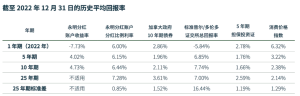
Participating policies have had an average dividend rate of 7.28% over the past 25 years. Even during financial crises, rates remained stable, making them one of the most secure and reliable savings-oriented investments for Canadians. Dividend rates are closely related to interest rates, with a standard deviation of just 0.85% over the past 25 years. Historical data shows that Sun Life’s 1-year, 5-year, 10-year, and 25-year participating accounts all had higher dividend rates than Canada’s 10-year government bonds. The longer the policy is held, the greater the compounding effect.
3. Loan Interest Rate Changes
In the current economic downturn, governments may adjust interest rates to regulate the economy. Such adjustments could directly affect future loan costs. However, one key advantage of the IFA is that interest is tax-deductible; if your marginal tax rate is over 50%, it’s like getting a 50% discount on interest. While loan rates may fluctuate, the changes are generally small and unlikely to have a significant long-term impact.
The IFA strategy can both preserve assets and provide opportunities to expand business and investment, making it an attractive choice for high-net-worth individuals. If you would like to learn more about IFA case studies and operational details, please add us on WeChat to contact Jiaxin’s licensed insurance advisors. We remind you that due to market changes, this article is for reference only and does not constitute personalized investment advice.