



Why Businesses Large and Small in Canada Love Buying Group Insurance for Employees (Part 2)
— Traditional Group Insurance
In today’s globalized, fast-developing world, employee benefits and health have become core elements shaping a company’s competitiveness. Especially in Canada, group insurance has been integrated into employee benefits by many companies and is widely recognized and valued.
01 Advantages of Group Insurance
For small and medium-sized businesses, purchasing group insurance offers tangible returns on investment. Group premiums paid by the company can be tax-deductible, effectively reducing the corporate tax burden. No medical exams are required for employees, saving time and effort while lowering costs. Compared to individual health insurance, group plans generally offer lower premiums, higher benefit limits, and broader coverage. Group insurance also boosts employee morale, reduces turnover, improves operational efficiency, and strengthens talent competitiveness.
Advantages for Employees
While supporting business growth, group insurance brings many benefits to employees as well. Broad coverage reduces the financial pressure of medical expenses and enhances peace of mind; it can cover not only the employee but also family members, allowing employees to work with greater confidence and live with less worry. Because the employer selects the plan based on actual circumstances and needs, employees don’t have to spend time comparing complex insurance terms, saving hassle. Comprehensive protection helps employees feel the company’s care and respect, increasing job satisfaction and boosting productivity and engagement.
02 Coverage of Traditional Group Insurance
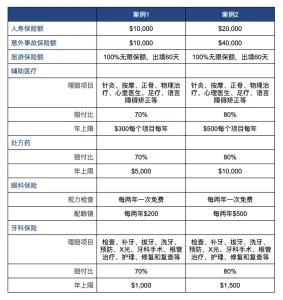
Dental care: For example, exams, cleanings, fillings and extractions, root canal treatment, etc.;
Paramedical/physical therapy: For example, acupuncture, massage, dermatological treatment, etc.;
Drugs and medical care: Prescription medications, private rooms, and other related medical expenses—such as oxygen equipment, prosthetics, cardiac monitors, and even medically necessary transportation.
Contingency insurance: Life insurance, critical illness insurance, travel insurance, disability insurance.
As the name suggests, Canadian group insurance is designed for groups and is generally offered by employers as an employee benefit. Although Canada has universal public healthcare, auxiliary expenses such as dental care, prescription drugs, and paramedical services are typically paid out of pocket. Group insurance can provide more comprehensive protection for individuals and their families. Employers can customize benefit limits and reimbursement percentages based on their circumstances; employees are automatically eligible without medical exams. Coverage is broad, including dental, vision, prescription drugs, paramedical services, as well as life, critical illness, travel, and disability insurance.
Below is a sample group plan provided by Canada Life, a major Canadian insurer (for reference only):
03 Important Considerations for Group Insurance
01 Employees and eligible dependents must enroll within 31 days of being invited; otherwise, they will be considered “late applicants” and may need medical evidence of insurability to rejoin the plan.
02 Renewal costs depend on claims experience: higher claim payouts generally lead to higher renewal premiums; lower usage can lead to lower renewal costs.
03 If the employer fails to provide complete documentation to the insurer, rates may be higher.
The above points are considerations when applying for a Canada Life group plan. Terms and rules may vary by insurer; please consult a professional insurance advisor.
04 Claims & How-To Guide
Most group plans provide convenient self-enrollment. When a company opts into a group plan, each employee receives an email or SMS invitation to register. The self-enrollment steps are:
01 Receive the invitation
02 Enter personal information
03 Provide banking information
04 Add dependent information
05 Designate beneficiaries
After completing these steps, the employee is successfully enrolled in the group plan and can enjoy the benefits provided.
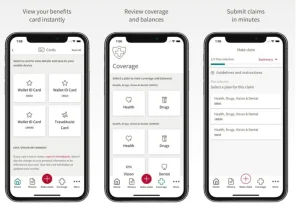
They can also download the insurer’s dedicated mobile app to conveniently check their own and their family’s accounts and coverage, submit claims online, and track claim status anytime.
05 Traditional Group Insurance (Group Benefits) vs Non-Traditional (HSA)
In the previous article, we introduced the Health Spending Account (HSA) form of group benefits: HUB–FlexSave.
When choosing a group benefits solution, both traditional group insurance and HSA-based plans have their advantages. Traditional group insurance requires periodic premium payments, and employees claim benefits according to the plan’s terms. While flexibility of spend is lower, the types of coverage are broad. In addition to health benefits, traditional group plans can include life, critical illness, travel, and disability insurance.
By contrast, with the FlexSave HSA plan, after a one-time CAD 250 setup fee, the employer does not pay ongoing premiums. The company only pays the employee’s eligible medical expenses when claims occur, plus a 10% administration fee and tax per claim. Employees can freely allocate their annual cap; flexibility is high and eligible expenses are reimbursed at 100%.
Below is a detailed comparison of the two approaches:
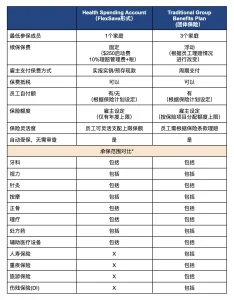
About benefit maximums:
* FlexSave HSA plans: the employer sets an overall annual cap
* Traditional group insurance: each benefit category has its own annual maximum under the plan
Overall, traditional group insurance is an ideal choice to provide comprehensive protection for employees and suits companies of all sizes—especially those focused on employee welfare and seeking broad medical protection. With larger headcount, it can also generate cost efficiencies for employers. By comparison, FlexSave HSA plans are better suited to smaller teams or employers needing customized, flexible benefits. Regardless of the option, companies should consider their own needs and employee interests to choose the most suitable plan. Feel free to add us on WeChat to connect with our professional advisors for the most comprehensive recommendations for your company.
Canadian group insurance provides dual protection for employers and employees. We hope every business owner can find the best fit, enabling companies and teams to grow together and create a better future. If you have any questions or need assistance, please contact Jiaxin. Our professional team looks forward to partnering with you to support your company’s development.