



Recently, Japan began discharging nuclear-contaminated water into the ocean. If radioactive nuclides enter the human body through the food chain and accumulate, they may cause birth defects in newborns, cellular cancer, and other issues. This has caused widespread panic and concerns about health. However, many people still think that such serious illnesses are far away from them. In fact, taking cancer as an example, 1 in 2 people in Canada will develop cancer, and someone is diagnosed with cancer every four minutes. This not only causes physical pain for the patient but also results in high treatment costs. At this point, some people might ask: “Isn’t there free healthcare in Canada? Then why should I still buy critical illness insurance?”
Many people overlook the fact that when you face a critical illness, in addition to treatment costs, you may face many hidden financial pressures—such as postoperative care costs, or a sharp drop in income if you are temporarily unable to work due to illness. Free healthcare will never cover these expenses, but the one-time tax-free payout from critical illness insurance allows you to use the money however you wish—covering drug costs, nursing fees, and more—lightening the financial burden of life.
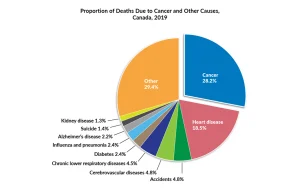
According to estimates in 2022:
- About 122,100 Canadian men were diagnosed with cancer, and about 45,100 died from it.
- About 112,800 Canadian women were diagnosed with cancer, and about 40,000 died from it.
- In Canada, an average of about 641 people are diagnosed with cancer every day, and about 338 people die from cancer daily.
- Lung cancer, breast cancer, colorectal cancer, and prostate cancer are the most commonly diagnosed types, accounting for 46% of all new cancer cases.
- Prostate cancer accounts for 20% of new cancer cases in men.
- Lung cancer accounts for 13% of all new cancer cases.
- Breast cancer accounts for 25% of new cancer cases in women.
- Colorectal cancer accounts for 10% of new cancer cases.
*Data source: Canada Cancer Society
As renowned heart specialist Dr. Barnard once said, “You need insurance not because life will end, but because it will continue.” But if you go through life without any major illnesses, don’t worry about “wasting” your money—many plans offer a full refund of premiums, making it a deal you can’t lose.
Introduction to Critical Illness Insurance:
Critical illness insurance pays a lump sum, tax-free, and with no restrictions on usage. For example, if your coverage amount is CAD $200,000, once you are diagnosed with a covered critical illness and survive the required survival period stated in the policy, you can claim CAD $200,000 from the insurance company—without providing any medical expense receipts. This payout is completely tax-free and can be used freely without any restrictions.
So, what does critical illness insurance cover?
Common critical illnesses: Cancer, malignant tumors, heart attack, stroke, etc.
Other critical illnesses: Aplastic anaemia, blindness, Alzheimer’s disease, and more than 20 other conditions.
Other illnesses (non-life-threatening): For example, benign tumors. Taking Canada Life (CL) as an example, such illnesses are also covered, with up to 4 claims allowed, each up to CAD $50,000, without affecting the critical illness coverage amount or payout.
Additional services: Critical illness insurance also provides free medical consultation services, such as Best Doctor, which connects you with top global specialists for consultations, and even offers psychological counseling services.
Critical illness insurance entered the Canadian market in the early 1990s. As the incidence of critical illnesses rises, more and more Canadians are including this type of insurance in their long-term financial plans. According to major Canadian insurance companies, about 70% of claims are for cancer. Adding in other common conditions—such as heart disease, stroke, coronary artery bypass surgery, and aortic surgery—the claim rate reaches 80%-90%. For most people, purchasing critical illness insurance provides solid protection against most major illnesses, safeguarding your health and life.
Types of Critical Illness Insurance:
Currently, the Canadian market offers a wide variety of critical illness insurance plans at different price points for flexible choices.
Standard plans: Cover more than 20 types of critical illnesses.
Basic plans: Cover only a few common critical illnesses, such as cancer, but at a lower cost.
By coverage term, they are divided into term and lifetime coverage:
Term coverage: For example, T20 means coverage for 20 years, with premiums paid for 20 years. If you are on a budget but have family and mortgage responsibilities, you can choose coverage during your most critical period—for example, from age 30 to 50—with CAD $200,000 coverage costing about CAD $60–$100 per month.
Lifetime coverage: Coverage until age 100. Under the same conditions above, monthly premiums range from CAD $270–$500. In case of accidental death, all premiums can be refunded.
Payment period: Ranges from 10 to 20 years.
Premiums: Refundable or non-refundable options available.
In short, you can choose the plan that best suits your needs and budget.
What about children’s coverage? Some insurers, such as Sun Life, also offer dedicated children’s critical illness insurance. These policies mainly cover common childhood critical illnesses, with lower premiums and various options to suit your needs. For example, a 5-year-old girl insured until age 70 with CAD $100,000 coverage would pay only about CAD $70 per month—less than $2.50 a day! This is a gift from parents to their children, providing lifelong protection and peace of mind to witness their growth.
Claims Process:
First, prepare the application materials, including: policy number, insured person’s full name, date and type of diagnosis of the covered illness, and medical records. If diagnosed outside Canada, a translated diagnosis certificate may be required. Different insurers may have different requirements for these documents.
Next, after submitting the documents, the insurer will send a claim application form to the insured. Once the form is completed and submitted, the insurer will start reviewing the claim. During the review, if additional documents are needed, the insurer may contact the doctor directly. For policies purchased within the last five years, the insurer may also request extra medical reports.
Finally, if everything is in order, the insurer will approve the claim. If the claim is denied, the insurer will provide detailed reasons.
Here are two tips from us to speed up the claim process:
- Confirm in advance that the insured’s lawyer holds a POA (Power of Attorney) to sign on their behalf in case they are unable to sign.
- Provide complete contact information for the insured’s primary physician (especially phone or email) at the time of application so the insurer can reach them directly if needed.
Benefits of Buying Critical Illness Insurance Early:
Statistics show that the average age of critical illness claims is 42—a high-pressure stage of life when many have both elderly parents and young children to care for. A single critical illness can be financially devastating for a middle-class family, wiping out years of savings. The importance of critical illness insurance cannot be overstated. We strongly recommend purchasing it as early as possible for the following reasons:
1. Age: Premium rates are related to age. The younger you are when you buy, the lower your premiums.
2. Time: Many plans now offer lifetime coverage. Buying early means enjoying coverage for a longer period. Some plans also have dividend features—dividends compound over time, so the earlier you buy, the earlier you benefit, and the greater the long-term gains.
3. Inflation: As the economy grows, prices rise, and insurance products evolve. Each product is available for only a limited time, and newer products often have higher rates. Buying early locks in lower premiums while your income and spending power increase.
4. Underwriting: Young people are generally healthier and more likely to pass medical underwriting easily. Waiting until later may mean higher premiums or even being declined. The whole point of insurance is to prepare for illness—don’t wait until illness makes you uninsurable.
5. Risk: As the saying goes, we never know whether tomorrow or the unexpected will come first. The earlier you prepare, the less you have to worry about surprises.
Of course, while buying early is generally better, the exact premium will depend on factors such as policy type, payment period, gender, age, smoking history, and medical history. For example, with Sun Life critical illness insurance, a 35-year-old non-smoking woman choosing a 10-year payment plan would pay CAD $32.40/month.
After reading this, you’ll see that no matter your needs or budget, there is a suitable insurance plan for you. To determine the best choice, contact us to speak with one of our professional insurance advisors.
*This article is for reference only. Market conditions and insurance products may change. Each insurance company may have different plans and claim procedures. We recommend consulting with a professional insurance advisor to choose the right plan for your needs and ensure maximum protection.